
Residential drywall in Menomonee Falls
Remodels, additions and repairs for homeowners who want it done once and done right.
Get a free estimate
The short of it
Most homeowners need a drywall contractor two or three times in their life. A remodel. A basement. A leak. Since you do not do this often, here is the honest version of how it works.
Drywall is not complicated, but it is unforgiving. Hang it carelessly and it cracks. Rush the finishing and every seam shows through the paint. Do both properly and nobody ever thinks about the walls again. That is the goal.
What we do in a house
We hang new drywall on walls and ceilings. We tape and finish it. We repair what is cracked, dented, stained or holed. We take down popcorn ceilings. We board basements and garages.
We do not paint, do electrical or fix plumbing. We will tell you when one of those needs to happen first, and we work fine alongside whoever you hire for it.
When people call
Remodeling
Kitchen, bath or a wall coming out.
Adding on
A new room that has to match the old ones.
Finishing a basement or garage
First-time drywall in a bare space.
Something broke
Leak, hole or cracked ceiling.
Getting ready to sell
Walls cleaned up before photos.
What happens
We look
At the job, in person or from photos.
We quote
In writing. Scope, price, days.
We protect
Floors, furniture, doorways, vents.
We work
Hang, tape, three coats, sand.
We check
With a light, with you, before we go.
The decisions you will make
Smooth or textured. Smooth looks sharper and costs a bit more labor. Texture hides small flaws and matches what many local houses already have.
Standard or premium finish. Standard, called Level 4, is right for most rooms. Premium, Level 5, adds a skim coat and is worth it in bright rooms with big windows. We will tell you where it matters and where it does not.
What you get
A straight answer
On cost, timing and what you actually need.
A clean house
Dust contained, floors covered.
Walls that last
Fastened and taped to stay put.
A room ready for paint
Sanded and checked.
What the estimate lists
A residential estimate from us spells out the work room by room. You should be able to read it and know exactly what will be different when we leave.
Rooms and surfaces
Which walls and ceilings are included. If only one wall of a room is in the job, it says so.
Type of work
New board, repair, skim coat or texture removal. Each is priced differently, so each is listed.
Finish
Smooth or textured, and to what level. If texture is being matched, the type is named.
Protection
Floor covering, plastic barriers, vent covers. What we protect and how.
Cleanup and haul-away
Whether debris removal is included. With us it is, and the estimate says so.
What happens next
The wall is left ready for primer. Painting is listed as not included so there is no confusion.
If something cannot be known until a wall is opened, such as how far water travelled, the estimate says that too and explains how that part will be handled.
How the days run
A typical single-room job in a lived-in house.
Day one
Floors covered, room sealed with plastic, vents blocked. Damaged board comes out or new board goes up. Tape and first coat on by the end of the day.
Day two
Second coat. This is a shorter visit. The first coat has to be dry before we start, so the heat needs to stay on overnight.
Day three
Final coat, spread wide. Short visit again.
Day four
Sand, check with a light, touch up, texture if needed. Plastic comes down. Vacuum and wipe down.
Small repairs can be compressed into two visits with setting compound. Whole-floor jobs stretch the same pattern across more rooms, with crews moving from one room to the next while the last one dries.
You can live in the house the whole time. The room itself is usable between visits if you can step around the plastic.
What we need from you
Access and a clear room. Take down what hangs on the walls we are working on. Move furniture to the middle of the room or out of it. We cover what stays. If the job is a ceiling, the whole floor area below needs covering, so the emptier the better.
Heat on, at a normal setting, for the whole job. Compound dries by evaporation. A cold room or a room with the vents shut will add a day to every coat.
Decisions before we start. Smooth or textured. Which rooms get the best finish. Whether you want anything added inside an open wall while it is open, such as an outlet or insulation. Those are much cheaper to do now than later.
A way to reach you during the day. Most jobs run without questions. When one comes up, it is usually behind a wall, and a quick answer keeps the day on track.
What can change the plan
What is behind the board. A repair that looks simple from the room side can turn up wet insulation, old wiring, a pipe where a screw needs to go, or framing that is not where it should be. When we find something like that, we show you and explain the options before going on.
Old repairs. Walls that have been patched before often hide thick compound, mesh without backing, or layers of texture. Blending into that takes more work than blending into a clean wall. We can usually tell from a close look, and we note it in the estimate when we can.
Weather. Humid summer weeks slow drying, mostly in basements. A cold snap matters only if the space is not heated. Either can add a day.
Changes you ask for. Adding a wall or a room to the job once we are there is common, and it is usually the cheapest time to do it. We give you a price for the addition before starting on it.
Mistakes we see in houses
Paint straight over a repair
Without primer the repair shows as a dull patch. Prime first, every time.
Spackle in a moving crack
It fills and then splits. Cracks at joints and corners need tape.
Heavy things on drywall anchors
Televisions, shelves and mirrors belong on studs or blocking. Pulled anchors are one of the most common repairs we do.
Ignoring a small stain
A stain is a leak report. Finding the source early is always cheaper than replacing a ceiling later.
None of these are hard to avoid. Most come down to one more step that takes ten minutes.
After we leave
Prime the new work with a drywall primer. Look at it in daylight once the primer is dry and mark anything you want touched up. Then paint.
Give fresh paint a couple of weeks to harden before you hang heavy items or push furniture against it. In a new or remodeled room, expect a hairline or two after the first winter as the framing settles. That is normal and quickly fixed.
One more note
No job is too small to ask about. One cracked ceiling joint or one hole behind a door is ordinary work for us. Send a photo and you will get a straight answer on what it needs.
Before and after
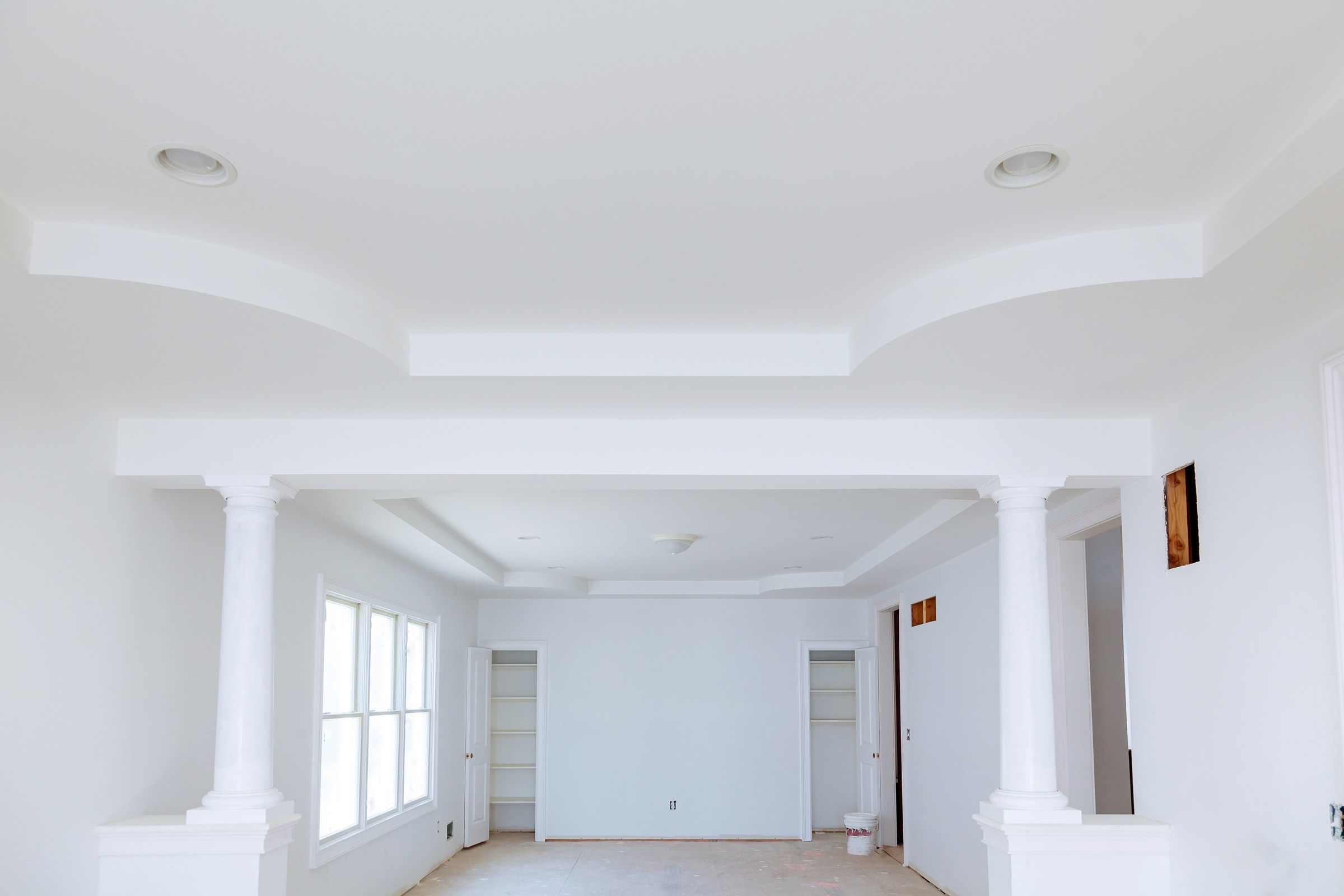
Stock photos, shown to illustrate the result. Not one of our jobs.
Houses in Menomonee Falls
The village has homes from every decade. Older houses near Main Street and the river, some with plaster. A lot of ranches and colonials from the 1960s through the 1980s. Newer subdivisions to the north and west.
The older ones need careful blending between plaster and new board. The mid-century ones have popcorn ceilings and seasonal cracks. The newer ones mostly need basements finished. We do all three every month.
Questions
How much does drywall cost?
It depends on area, height, access and finish. We give you a written number after seeing the job. No charge for that.
How long will you be in my house?
A room is about a week, but we are not there all day. Most of the time is compound drying.
Do I have to move furniture?
Clear the room if you can. What cannot move gets covered.
Can you match my existing walls?
Yes. Texture and finish are matched so new work does not stand out.
Do you take small jobs?
Yes.
Need a price on residential drywall?
Send the details. You get a written estimate back, free.