
Ceiling drywall repair in Menomonee Falls
If the same crack keeps coming back, it was never actually repaired. We repair it.
Get a free estimate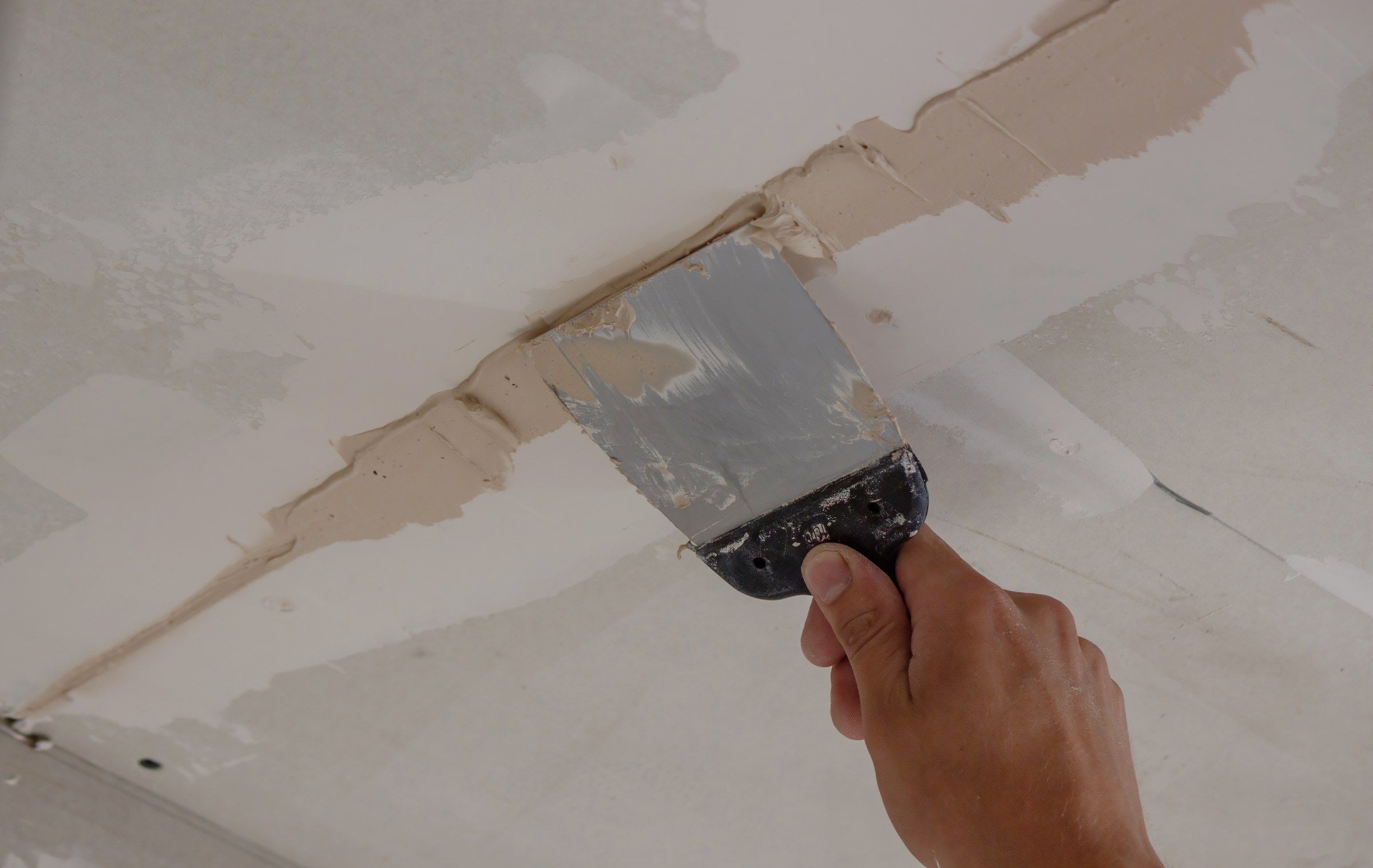
The short of it
Ceiling cracks get filled and painted all the time. Then winter comes and they open again. That is because filler is not a repair. It is makeup.
A crack in a ceiling means two sheets of drywall are moving against each other. Until that is dealt with, nothing on the surface will hold.
What a real repair involves
Screws go into the joists on both sides of the crack to stop the movement. The old tape is cut out. New paper tape is set in a hard-setting compound.
Then three coats, spread wide. A ceiling shows everything, so the feathering has to be generous. Texture is matched last.
Problems we fix
Seam cracks
Straight lines across the room.
Corner cracks
Where ceiling meets wall.
Nail pops
Small round bumps.
Sagging
Board drooping between joists.
Stains
From old leaks.
Holes
Where lights or fans used to be.
Steps
Diagnose
Movement, moisture or bad tape.
Protect
Cover the room.
Secure
Screws into joists.
Re-tape
Paper tape, setting compound.
Coat and match
Feather wide, texture.
Straight talk on paint
A ceiling repair needs the whole ceiling repainted. Not our rule. It is just how ceiling paint behaves. Touch-ups show as a different shade from across the room.
So budget for a coat of ceiling paint after we are done. It is one flat color and goes quickly.
What you get
A crack that stays shut
Because the joint is rebuilt.
A level surface
No ridge.
Secure board
Sags pulled back up.
A ceiling ready for paint
Sanded and sealed.
What the estimate lists
The problem
Crack, stain, sag, hole or failed patch. Named and measured.
The cause
What we believe caused it, and whether it has been dealt with. If we are not sure, the estimate says so.
Method
Re-tape, screw up and refasten, cut out and replace a section, or re-board the whole ceiling.
Texture
Smooth, or matched. If the texture cannot be matched well, a whole-room retexture is offered as an option.
Access
Standard height or scaffold.
Not included
Fixing the roof, plumbing or attic issue behind the damage. Painting the ceiling.
How the visits run
Visit one
Room below covered. Loose tape and compound cut out. Sagging board refastened or removed. New board fitted where needed. Tape and first coat.
Visit two
Second coat, wider. On a ceiling this coat does most of the leveling.
Visit three
Final coat, feathered far past the repair. Ceilings need more width than walls because of the way light crosses them.
Visit four
Sanded and checked with a light. Texture matched if there is one. Covers removed, floor vacuumed.
Small repairs can drop to two or three visits with setting compound. A full-room re-board follows the installation schedule instead.
Then prime. Use a stain blocker over any old water mark. Paint the whole ceiling in one session, working away from the main window.
What we need from you
The history. When the crack or stain first appeared. Whether it changes with the seasons. What is above it: a bathroom, an attic, a roof valley. Whether anything has been repaired already. This tells us most of what we need about the cause.
The source fixed, if it is water. We can open the ceiling and help locate a leak. We do not close it until the leak is dealt with.
A clear room below. Everything from a ceiling repair falls straight down. Move what you can. We cover the rest and the floor.
A look in the attic, if it is safe and accessible. Wet or flattened insulation above the damage, daylight at the roof deck, or frost on the nails in winter are all worth reporting.
What can change the plan
The board is worse than it looks. A stain on firm board is a small job. If the board crumbles when we cut into it, the section comes out and the repair grows. We check by pressing and probing before we price, but the true condition shows once it is opened.
The texture will not blend. Older popcorn and some hand trowel patterns cannot be copied convincingly over a small area. The option then is to retexture or smooth the whole ceiling in that room. We give you both prices.
The cause is still active. If the cavity is damp when opened, the repair waits for the roofer or the plumber.
Movement. A crack from truss uplift needs a different fix from a crack along a joint. If the first repair method is not right for the cause, we change it and tell you why.
Mistakes we see on ceilings
Caulk in a ceiling crack
It shows as a shiny line and splits within a year.
Narrow coats
Ceilings need the compound spread wider than walls, or the repair reads as a stripe.
Touching up flat paint
It dries a different shade. Paint the full ceiling.
Screwing up wet board
Board that has been soaked will not hold fasteners. Replace it.
After we leave
Prime the repair. Use a stain-blocking primer where there was a water mark. Then paint the entire ceiling in one go, cutting in at the walls and rolling toward the main source of daylight.
If the damage came from the attic side, check up there again after the next cold spell or heavy rain. If it came from a bathroom, look at the fan. It should vent outdoors and run long enough after a shower to clear the room.
Notes from the job
Truss uplift is the most common ceiling complaint in this area. In cold weather the top of a roof truss stays cold while the bottom, buried in insulation, stays warm. The truss arches slightly and lifts the ceiling off the interior walls. A crack opens at the corner. In summer it closes. No amount of compound will hold that corner still. The repair that lasts lets the ceiling board float near the wall, so the corner moves as one piece.
Bathroom ceilings peel from the room side. Steam condenses on a cool ceiling, the paint softens, and the tape lifts. If the fan is undersized, vents into the attic, or is switched off as soon as the shower ends, the same thing happens to a new repair. Fix the ventilation at the same time.
Kitchen ceilings collect grease. Any repair there needs the surrounding area cleaned and primed with a bonding primer, or new paint will not hold.
Old plaster ceilings can be covered. Where a plaster ceiling is cracked all over and sagging from its lath, a layer of drywall screwed through to the joists is often the practical fix. It is less mess than tearing the plaster down and gives a flat, new surface.
Recessed lights and ceiling repairs go together. If you are adding lights, have them cut in first. Every new opening is a place for a clean edge, and it avoids patching a ceiling we have just finished.
Seasonal timing helps. Cracks from movement are at their widest in late winter. Repairing them then, when they are open, gives a better result than filling them in summer when they have closed up.
Finally, look up now and then. A new stain the size of a coin is a small repair and an early warning. The same stain left for a season can be a section of ceiling.
Before and after
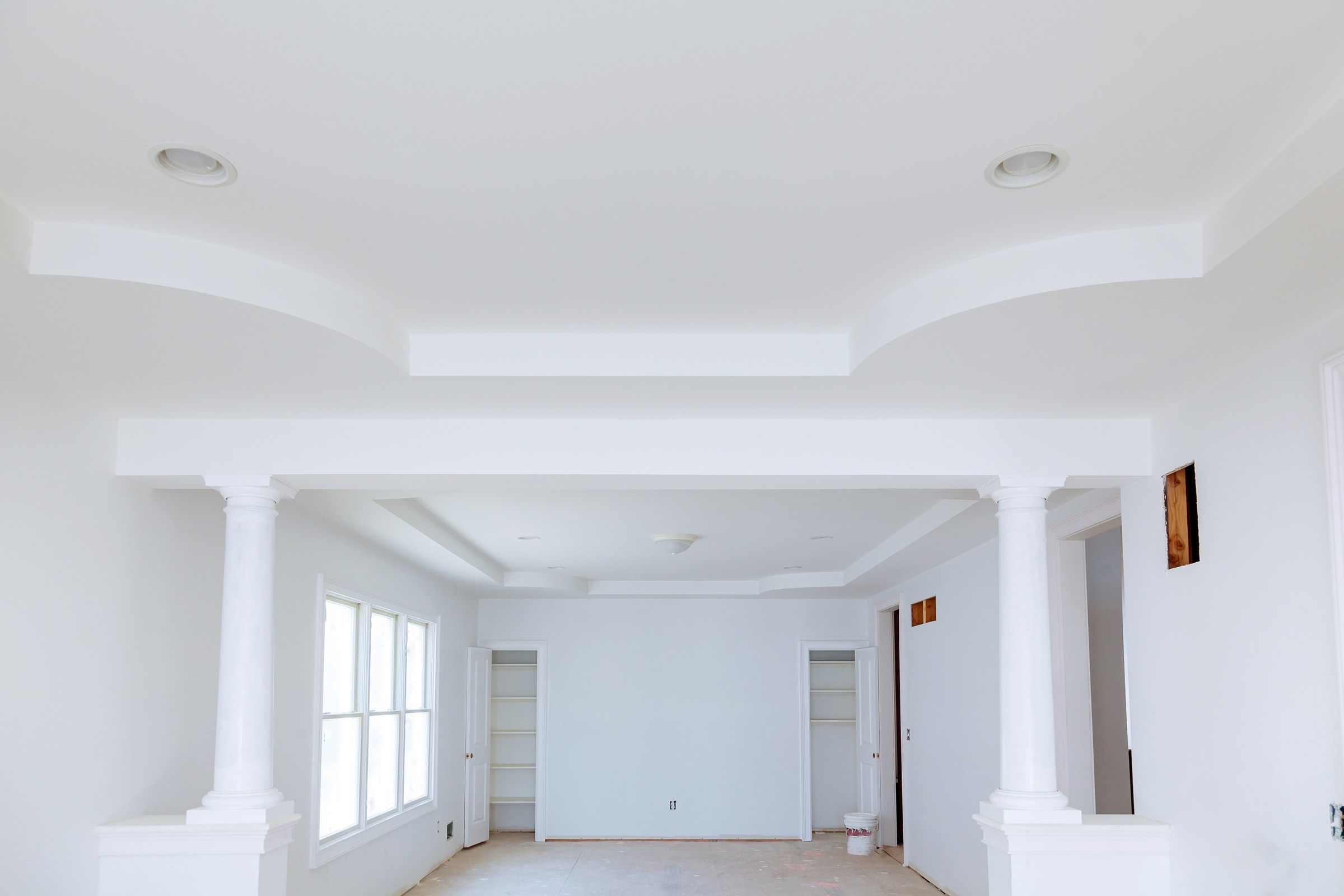
Stock photos, shown to illustrate the result. Not one of our jobs.
Why it happens here
Cold. When it gets well below freezing, roof trusses bow upward a little and lift the ceiling at interior walls. Cracks open at the corners and close again by summer.
Every house with trusses in this part of Wisconsin does it to some degree. There is a fastening method that lets the corner move without cracking. We use it.
Questions
Is my ceiling going to fall?
Almost certainly not. A crack is cosmetic. A heavy sag after a leak is the one to have checked quickly.
Why did the last repair fail?
It was filled, not re-taped.
Can you match my ceiling texture?
Most of them, yes. Not popcorn.
How long?
Two or three visits on back-to-back days.
Do plaster ceilings count?
Yes. We can re-secure and skim them or cover with drywall.
Need a price on ceiling drywall repair?
Send the details. You get a written estimate back, free.