Drywall repair in Menomonee Falls
Hand us the list. Cracks, pops, dents, corners. We go through it once and it is done.
Get a free estimate
The short of it
Every house has a list. The crack over the door. The pops in the hallway ceiling. The corner the movers hit. It never seems worth a phone call on its own.
Put it all together and it is half a day of real work that makes the whole house look better. That is how we like to do repairs. All at once.
How we repair
We start with why. A crack means failed tape or movement. A pop means a loose fastener. A dented corner means bent bead. Each gets the fix that suits it: screws, new tape, new bead.
Then the surface. Coats of compound, feathered wide, sanded, textured to match. Filler alone is not on the menu.
The usual list
Door and window cracks
Diagonal, from the corners.
Nail pops
Bumps and circles.
Loose tape
Peeling or bubbled seams.
Corners
Dented or cracked bead.
Dents and gouges
Furniture, kids, life.
Old patches
Redone to disappear.
A repair job
List
Walk the house, mark every spot.
Protect
Cover floors and furniture.
Fix causes
Screws, tape, bead.
Coat
Two or three passes.
Sand and match
Ready for primer.
Save yourself money
Do them all at once. Setup and travel are a big part of a small job. Ten repairs in one visit cost far less than ten visits.
Before we come, go around with painter’s tape and flag everything. Ceilings too.
Good times to do it
Before painting
Paint will not hide it.
Before listing
Buyers look at walls.
After closing
Start with clean walls.
After an inspection
Clear the report.
What the estimate lists
The list
Every repair, by room. Screw pops are counted in groups. Cracks are measured by length.
Method for each
Refasten and fill. Cut out and re-tape. Replace bead. Cut out and replace board.
Texture
Which walls need matching.
Visits
How many, and about how long each will be.
Access
Anything needing a tall ladder or scaffold.
Not included
Paint. Repairs to the cause, such as a leak or a sticking door.
Mark each spot with a piece of painter's tape before you photograph the rooms. It keeps the list accurate and makes sure nothing is missed on the day.
How the visits run
Visit one
Walk the list with you. Floors protected at each spot. Loose tape cut out, new screws driven beside pops, damaged bead removed, holes cut square. Tape and first coat on everything.
Visit two
Second coat on every repair. Faster than the first visit.
Visit three
Final coat. Once dry, sanded. Texture matched where needed. Dust wiped and vacuumed.
A whole-house list and a three-item list take the same number of visits. Only the length of each visit changes.
At the end we walk the list again with you and check each one off.
What we need from you
The list. Walk every room, including closets, stairwells and ceilings, and put a piece of painter's tape beside each crack, pop, dent and hole. Photograph each room. That is the scope.
What you know about the causes. A crack that opens every winter. A corner that keeps getting hit by the vacuum. A stain that showed up after a storm. Each points to a different repair.
Your painting plans. If the walls are being repainted, repairs should happen just before. If they are not, tell us, and we will say which repairs are likely to need a full wall painted to hide them.
Access to each spot. Furniture pulled back, pictures down.
What can change the plan
A crack that is more than a crack. If loose tape runs further than it appears, the cut-out gets longer. We find the end of it before we start coating.
Hidden water. A soft spot near a stain means the board has to be replaced, not repaired.
Structural signs. A widening diagonal crack with a sticking door nearby is a question for someone other than us. We will say so.
More items. People nearly always find a few more spots once the first ones are fixed. Add them while we are there.
Mistakes we see in repairs
Hammering a popped nail back in
It pops again. Add a screw beside it and then set the nail.
Filling a crack with no tape
Back by next season.
Small, tight patches
They leave a visible ridge. Feather wide.
Mismatched texture
A smooth spot on a textured wall is as obvious as the hole was.
Touch-up paint on old walls
Faded paint will not match a fresh dab. Paint corner to corner.
After we leave
Prime each repair, then paint. Where several repairs sit on one wall, paint the whole wall.
Keep the roll of tape handy. Mark new pops and cracks as they appear through the year and have them done together. In a new house, wait for one full heating season before the first round. Most of the movement happens early, and repairs done after it tend to stay done.
Notes from the job
Nail pops and screw pops are different. Older houses were hung with nails, which loosen as the wood shrinks. The fix is the same for both: a new screw an inch or two away to hold the board tight, the old fastener set or removed, and two or three coats over both.
Corner bead damage is common in hallways and at the foot of stairs. A dented metal bead cannot be pushed back. The damaged length is cut out with a hacksaw, a new piece is fastened in line with the old, and the corner is coated to hide the splice.
Cracks at door and window corners nearly always come back if the joint was placed at the corner of the opening when the house was built. The lasting repair cuts the joint out, tapes it with paper in setting compound, and feathers it wide. Mesh and spackle will not hold it.
Peeling tape is usually a taping fault from the original job: not enough compound under the tape. It often shows first in bathrooms and on ceilings. The loose tape comes out along its whole length, and the joint is done again from the start.
Texture matters as much as flatness. Orange peel, knockdown and skip trowel are each matched by adjusting material, tool and timing on a test board until it reads the same as the wall. The match is judged dry, since wet texture looks different.
Paint is the last variable. A perfect repair under a mismatched touch-up still shows. If you do not have the original paint, take a chip to a paint store for matching, and plan to paint the full wall.
Furnace humidifiers help. Holding indoor humidity steadier through the winter reduces the shrink-and-swell cycle that opens cracks. Do not overdo it. Too much humidity in a cold climate causes its own trouble on windows and in the attic.
Some things are not drywall problems. A crack that keeps widening, doors going out of square, floors sloping toward one corner. We repair surfaces. If the structure is moving, we tell you who to call.
Order matters when several trades are involved. Plumbing and electrical fixes first. Then drywall repair. Then primer and paint. Then carpet cleaning or floor refinishing. Repairing walls after new paint or new flooring means protecting both and painting twice.
For rentals, a standing list helps. Note the damage at each move-out, have it repaired in one visit, and hand the unit to the painter the same week.
Before and after
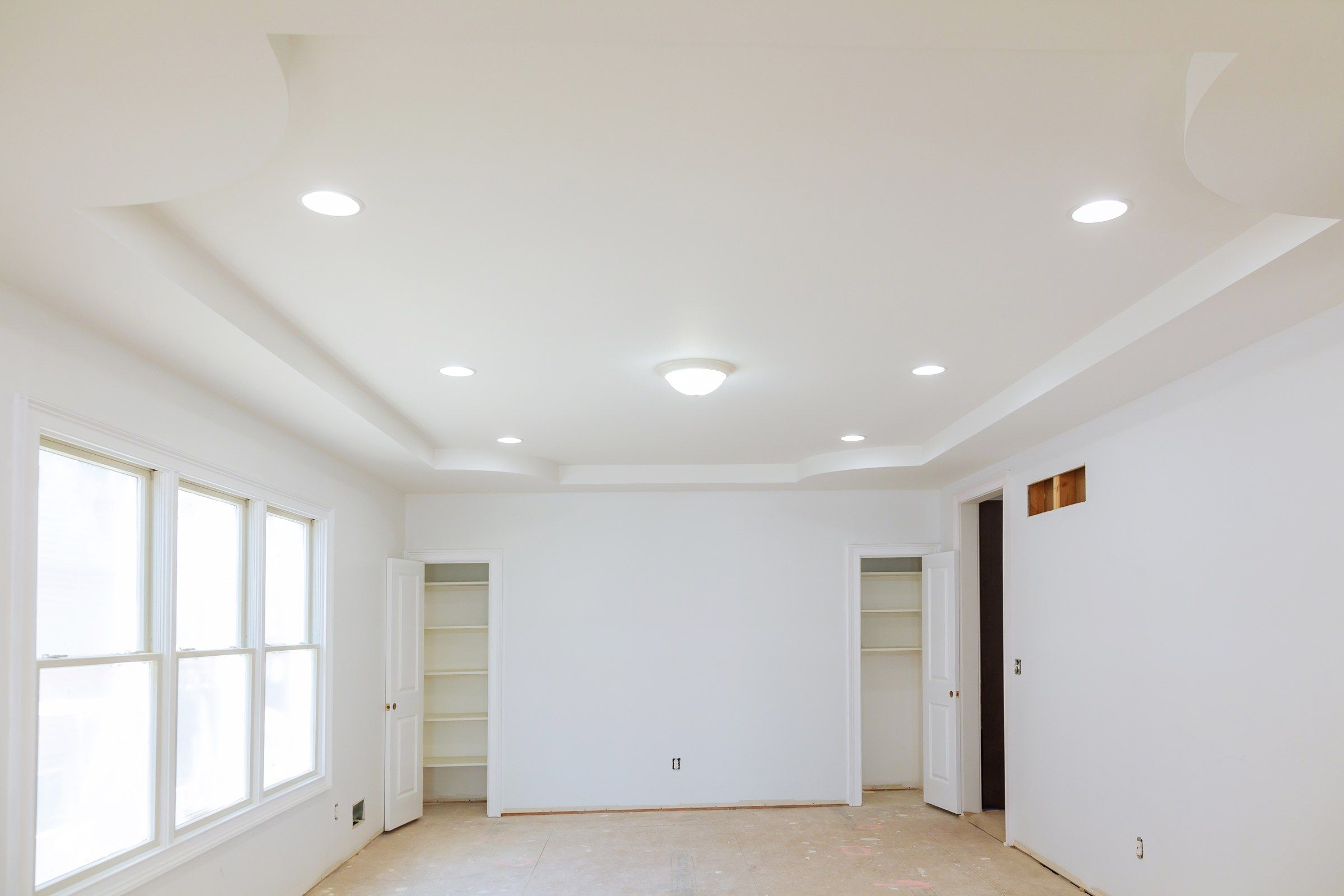
Stock photos, shown to illustrate the result. Not one of our jobs.
Why walls crack here
Dry furnace air all winter. Humid air all summer. Lumber shrinks and swells, and drywall joints take the strain. Ten winters in, most Falls houses have a few cracks and pops.
It is normal. It is also fixable.
Questions
Is a crack structural?
Rarely. Hairline cracks at joints are seasonal. Wide or growing ones with sticking doors should be checked by a structural professional.
What causes nail pops?
Framing shrinks and the fastener stays put. We add a screw and refinish.
One visit?
One job, two or three short visits for drying.
Do you match texture?
Yes.
Rentals?
Yes. We coordinate with the owner or manager.
Need a price on drywall repair?
Send the details. You get a written estimate back, free.